
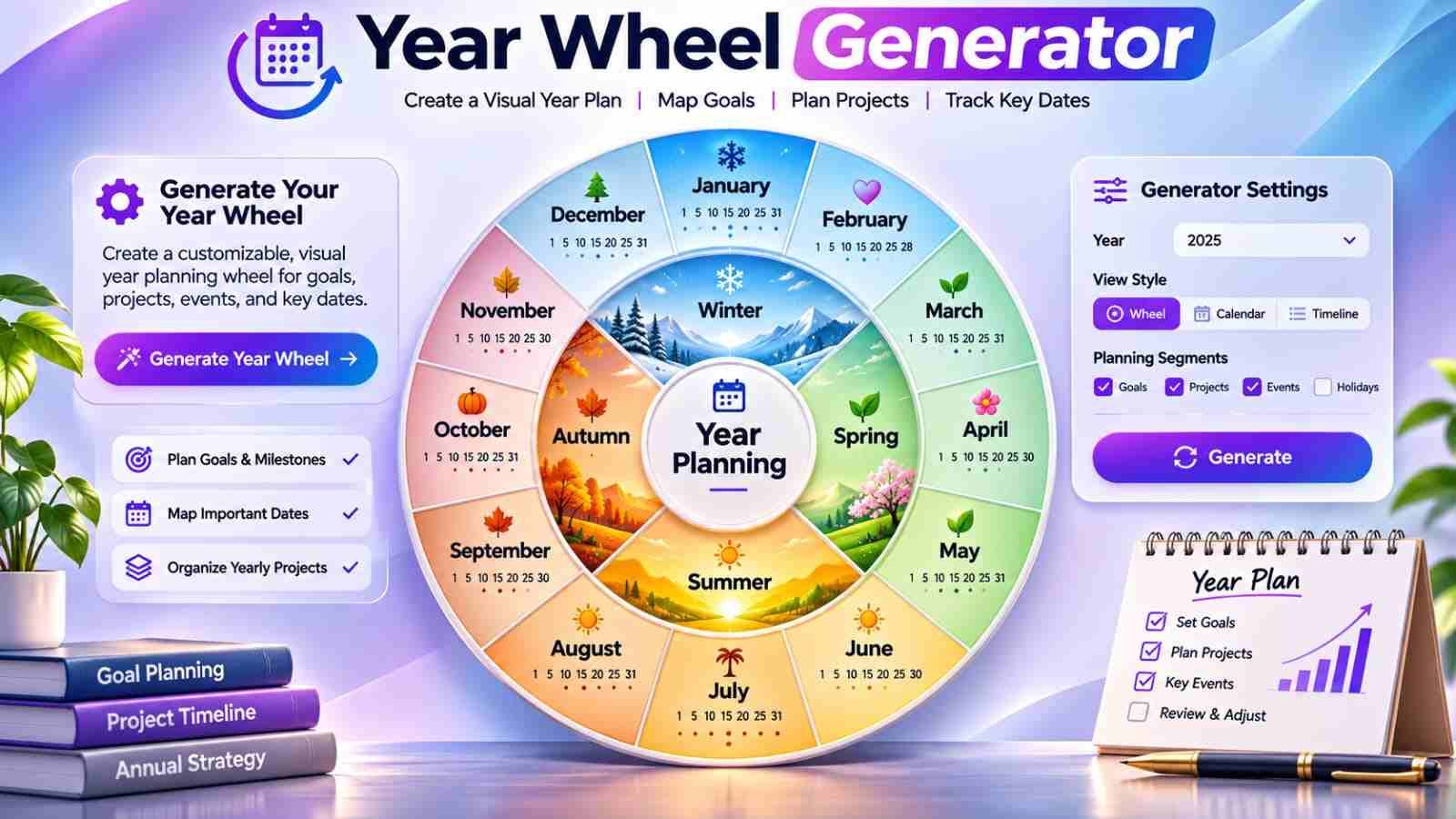
Unlike a fixed timeline, a Year Wheel Generator turns historical curiosity into a surprisingly useful quick choice. Its interactive spinner wheel can select a random year for a history class, creative prompt, or friendly challenge.
The appeal is flexibility: select a predefined list or adjust the range before you spin the wheel. A calendar year then becomes a starting point for discussion, not merely a date worth exploring.
Table of Contents
Spinning For A Random Year Wheel Generator
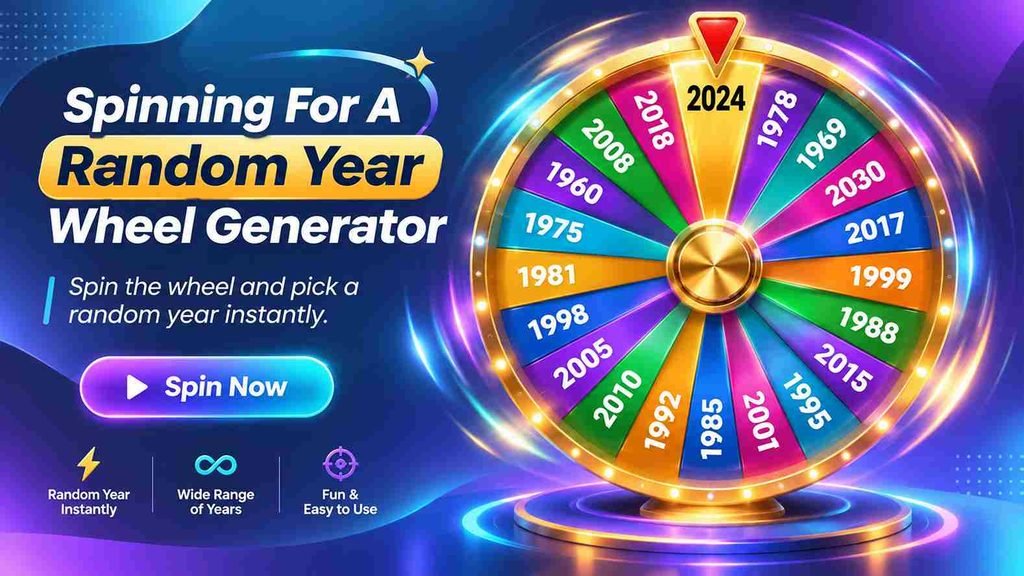
Unlike choosing dates from memory, a Spin button makes selection visible: the pointer circles before landing on a random segment. I use that brief suspense to introduce historical comparisons without steering students toward familiar periods.
For focused exercises, type the years within an own range, then check whether outcomes feel unbiased over repeated attempts. Even with pseudo-random software, sensible timing settings help distinguish entertainment from controlled classroom experiments in practice.
Configure
Before your first spin, edit the year range rather than accepting a preset. Set From and To limits that fit your activity, then review the slices to ensure every eligible year appears correctly on screen.
For classroom games, add dates one per line and check whether entries repeat. A balanced wheel gives each entry the same chance; changing the list deliberately is more useful than endlessly tweaking decorative visual effects.
Play
Turn historical trivia into a fast group challenge: reveal a selected date, invite competing explanations, then compare evidence. Players learn more when unusual events spark discussion instead of treating every round as a standard quiz.
Alternate between Music trivia and a Throwback outfit challenge to vary the pace. A Story setting round can invite creative imaginary scenes from that date, giving quieter players an equally entertaining way to fully participate.
Create Your Own
A personalized Year Wheel Generator works best when you control the years rather than accept a preset selection. Choose a historical window, remove unwanted entries, and balance the options before testing your custom online picker.
Adjust the settings to match your activity, then refine the style for easy reading. For classroom challenges, include specific milestones; for parties, mix familiar dates with surprises and spin to discover an unexpected creative prompt.
Music Trivia
A random year makes music games harder than familiar artist quizzes. Ask players to identify a chart hit released during the selected period, then reveal its correct recording date before awarding points for accurate answers.
For deeper trivia, compare breakthrough singles across decades instead of testing only famous choruses. Include regional releases, unexpected collaborations, and disputed debut dates; this rewards careful listening and research rather than repeated lucky guesses alone.
Also Read: Number Picker WheelGuess The Year
Guessing dates becomes easier when players connect significant events with familiar cultural clues. Instead of memorizing timelines, ask each student to identify three events from different eras, then compare their estimates before revealing the year.
For a livelier challenge, spin a year privately and offer clues about its inventions, headlines, or popular songs. Award points for correct answers, then discuss why certain details made the date easier to recognize quickly.
Throwback Outfit
A spin a year challenge makes a Throwback Outfit more interesting when clothing follows the selected era, not a generic retro costume. I usually check silhouettes, fabric textures, and everyday streetwear before choosing accessories carefully.
For a party, randomly select between 1980 and 1990, then study the trends people actually wore. A convincing look often comes from practical details: shoe shapes, jacket cuts, hairstyles, and carefully balanced color combinations.
Story Setting
A compelling story setting often begins with an unexpected historical date. Writers can generate distinctive backgrounds using a random year, connecting social customs, cultural changes, and character motivations without relying on predictable storytelling conventions.
For period stories, choosing 1924 introduces historical conflicts, while 2050 encourages futuristic worldbuilding. A carefully selected timeline shapes dialogue, technology, and atmosphere, helping authors develop believable narratives grounded in their chosen historical or imagined era.
History Research
Historical research often begins with an overlooked year, not a famous event. A snapshot of ordinary life can reveal changes in work, education, and migration that broad timelines too easily flatten or ignore.
Using random year generators can disrupt familiar research habits. Compare sources from the 19th century and 20th century, then explore how local records challenge assumptions about progress across the past century, without relying on textbooks.
Time Capsule
A Time Capsule activity becomes more revealing when a spinner wheel chooses the date instead of participants choosing familiar memories. After someone spins a year, collect headlines, photographs, prices, and personal reflections from that period.
For classroom History research, I recommend comparing everyday objects with major events. A random decade can prompt students to preserve a playlist, fashion notes, and future predictions, creating meaningful records rather than predictable nostalgia trips.
Conclusion
A Years spin wheel works best when its default list matches your purpose. Even equally likely outcomes can feel repetitive; choosing any range of numbers makes classroom challenges, writing prompts, and historical comparisons more relevant.
For better sessions, adjust appearance, try Choose Decades, or copy the wheel for another group. A Time capsule activity adds extra reflection, while random enough selections keep Guess the year games engaging without complicated rules.
Is The Spinner Wheel Truly Random?
A wheel result isn’t necessarily rigged; digital spinners typically use pseudorandom decision-making algorithms. However, every year requires the same slice for equal probability. Unequal segments or biased code can influence outcomes across many repeated spins.
Is It Possible To Cheat?
Cheating is possible when someone controls the algorithm or edits a segment before a spin. A supposedly rigged result can influence participants, so verify settings and let everyone watch each selection together for better transparency.
Is Every Year Equally Likely?
Equal chances depend on the setup, not the animation. In theory, each year gets one identical segment; in practice, duplicates or uneven entries change the odds, regardless of how convincing the randomness looks on screen.
Can I Pick A Random Year In My Own Range?
Yes. Set your preferred start and end years, such as 1950–2026 or 2000–2026, before spinning the wheel. A narrower range makes themed classroom activities easier while keeping each included year eligible for fair selection.
How Do I Pick A Random Decade?
To select a decade rather than an individual year, add decade labels to your random decision wheel. Include whole decades such as 1980–1989, then spin; the result identifies one historical period for exploration or activities.